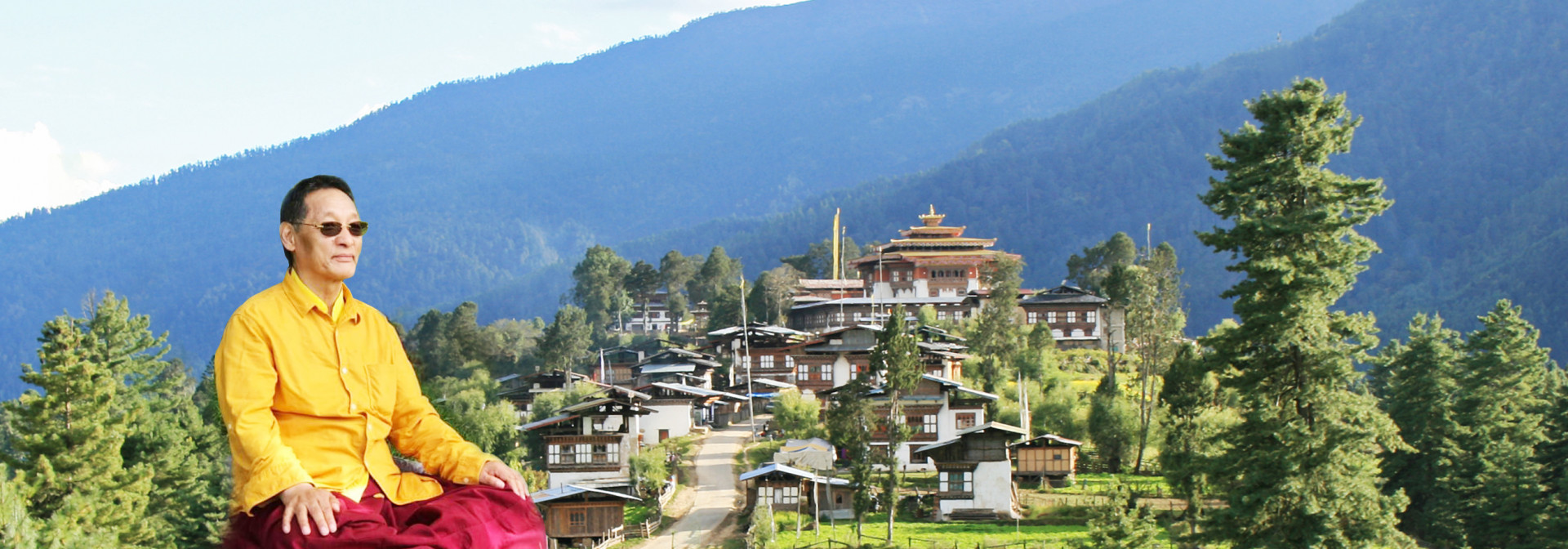
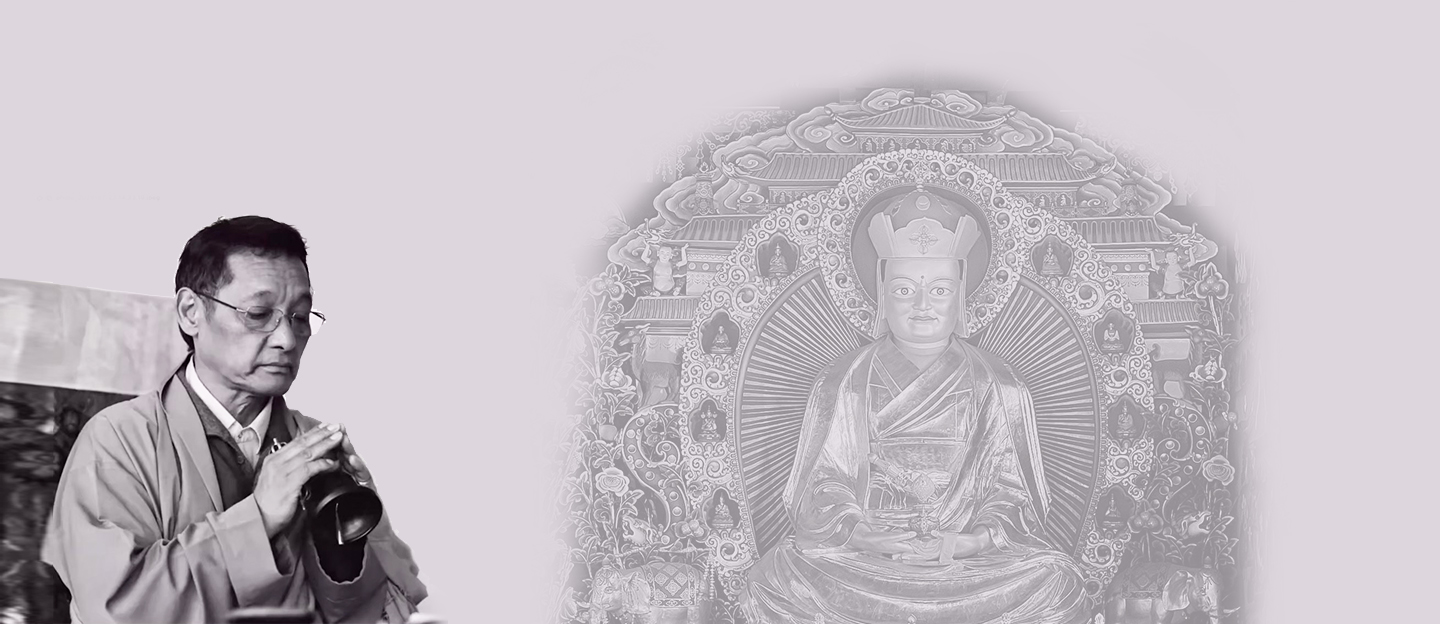
H.H. Gangteng Rinpoche
His Holiness Gangteng Tulku Rinpoche, the Great Treasure Revealer King-Pema Lingpa.
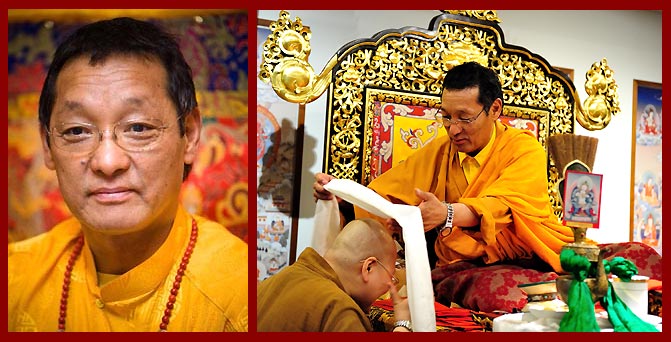
Gangteng Tulku Rinpoche, also respectfully known as Kyabje Gangteng Rinpoche, is one of the most revered masters of the Nyingma tradition of Tibetan Buddhism and the supreme lineage holder of the Pema Lingpa tradition in Bhutan. He is recognized as the ninth reincarnation of the renowned Gangteng Tulku lineage and is widely respected for preserving and transmitting the teachings of Vajrayana Buddhism, especially the Pema Lingpa lineage and the Dzogchen teachings.
Born in Bhutan in 1955, Rinpoche was recognized at an early age as the incarnation of the previous Gangteng Tulku. He received extensive teachings, empowerments, and transmissions from many of the greatest masters of the Nyingma school. Under the guidance of these accomplished teachers, he became a highly respected meditation master, scholar, and spiritual guide.
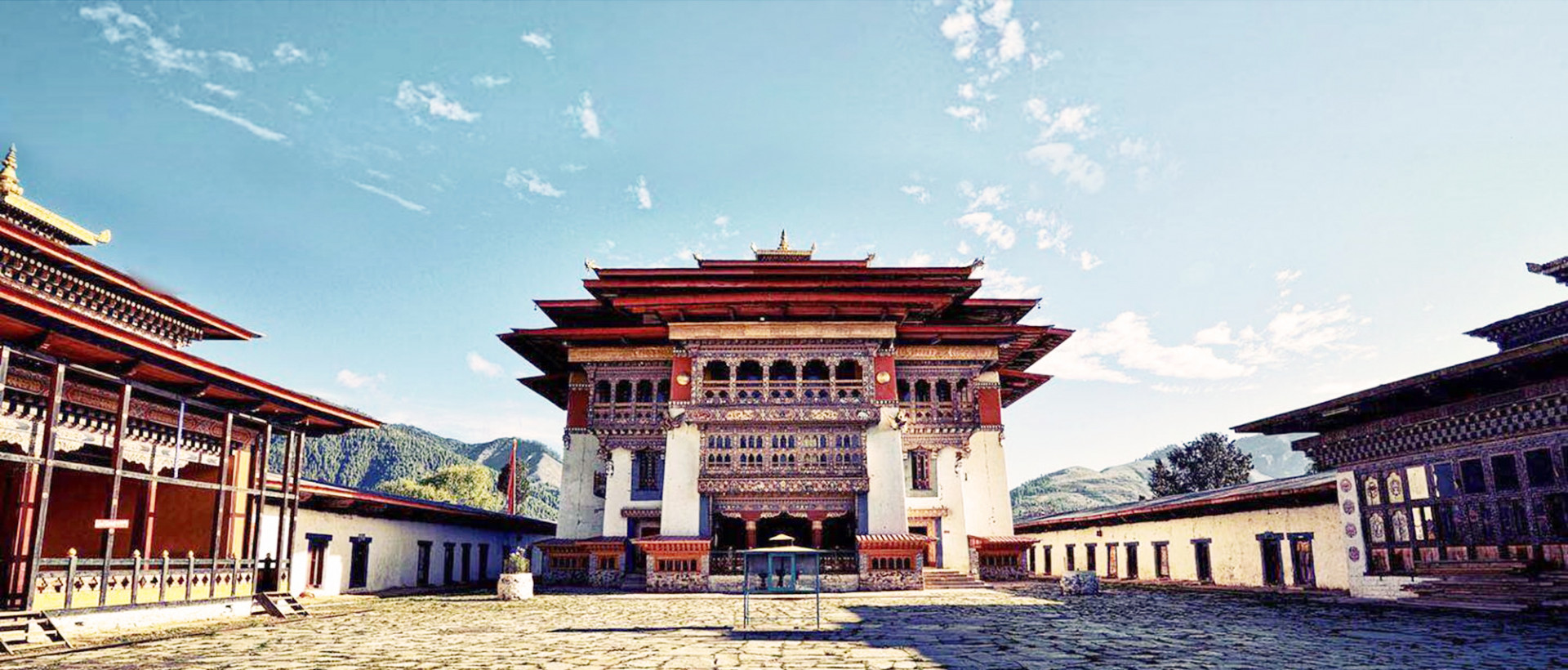
Rinpoche is the abbot of Gangteng Monastery, one of Bhutan’s most important Nyingma monasteries, originally established by the great tertön Pema Lingpa’s grandson, Gyalse Pema Thinley. Through his tireless efforts, Gangteng Monastery has flourished as a major center for Buddhist study, practice, and preservation of Bhutanese spiritual culture.
In addition to his activities in Bhutan, Gangteng Rinpoche has traveled extensively around the world, offering teachings, empowerments, and guidance to students across Asia, Europe, Australia, and the Americas. His teachings particularly emphasize compassion, bodhicitta, devotion, the practice of Dzogchen, and the authentic transmission of the Pema Lingpa tradition.
Rinpoche is also deeply committed to education, monastic training, and the preservation of Bhutanese spiritual heritage. Under his guidance, numerous monasteries, retreat centers, and Dharma institutions have been established or supported, benefiting countless practitioners worldwide.
Gangteng Tulku Rinpoche is regarded as the body emanation among the three principal incarnations of the great treasure revealer king Pema Lingpa, who manifested as the emanations of body, speech, and mind. Among these three emanations, Gangteng Tulku Rinpoche is recognized as the body emanation.
The First Gangteng Rinpoche bore the name “Pema Trinley” (Lotus Activity). In Bhutan, Gangteng Rinpoche is widely acknowledged as both the body emanation and activity emanation of Pema Lingpa. Furthermore, according to Guru Padmasambhava’s prophecy found in The Complete Gathering of Samantabhadra’s Intent, Gangteng Rinpoche is also regarded as an emanation of Guru Rinpoche’s enlightened body, appearing specifically to assist in the propagation of Pema Lingpa’s treasure teachings.
It is also said that during the time of Gautama Buddha, before the Buddha entered parinirvana, Gangteng Rinpoche previously incarnated as the devoted lay practitioner Cunda, who offered the Buddha his final meal and thereby fulfilled the conditions for the Buddha’s peaceful passing into nirvana.
Gangteng Tulku is revered as one of the Four Great Tulkus of Bhutan. The other three are Zhabdrung Ngawang Namgyal, the Je Khenpo of Bhutan, and Jamyang Khyentse Chökyi Lodrö, regarded as an emanation of Maitreya. These Four Great Tulkus hold the highest spiritual status in Bhutanese tradition. Traditionally, only these four are entitled to use the ceremonial parasol, a symbol of supreme spiritual dignity and exalted status.
Early Life
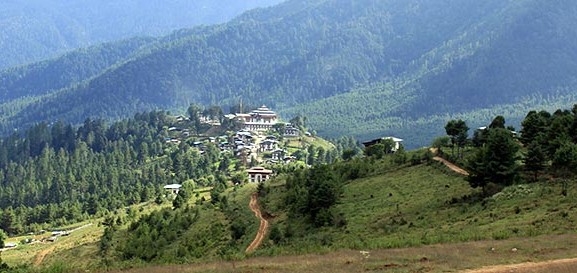
Gangteng Tulku Rinpoche, whose personal name is Kunzang Pema Namgyal, was born in 1955 in a beautiful and remote mountain region near Trongsa in central Bhutan.
When Kunzang Pema Namgyal was three years old, he once wandered into the forest while playing among his family’s cattle. He was carrying a small metal box – Gau (Portable shrine) belonging to his father, which contained a sacred Buddha statue bestowed by the King of Bhutan. As the child gently moved the statue after opening the box, the statue suddenly stood upright and declared, “I am going to Gangteng Monastery,” before miraculously flying away.
When Kunzang’s father discovered that his cherished statue was missing, he initially became angry and intended to punish the child. However, upon hearing the extraordinary account from his son, he immediately stopped.
At that time, no one in the family had ever heard of Gangteng Monastery, a distant and sacred monastery located in the mysterious Phobjikha Valley — renowned as the winter habitat of the black-necked cranes and the seat of the Gangteng Tulku lineage, regarded as the body emanation of the great Bhutanese tertön, Pema Lingpa. Deeply moved by the child’s words, Kunzang’s father immediately prostrated before him.
Although Kunzang Pema Namgyal was not immediately recognized as a reincarnate tulku, he had already begun his formal journey in Buddhist training. He studied at many important Nyingma monasteries, and many believed the young boy to be an extraordinary reincarnated master.
Later, he was formally recognized as the Ninth Body Incarnation of Pema Lingpa — one of the Five Great Treasure Revealers of the Nyingma tradition — by eminent masters including Rangjung Rigpe Dorje, Dudjom Rinpoche, Dilgo Khyentse Rinpoche, and other great Vajrayana masters.
Before formally ascending the throne of the Ninth Gangteng Tulku at the age of sixteen at Gangteng Monastery, he received the traditional education of a reincarnate lama as a fully ordained monk in Trongsa. The young abbot later became the spiritual leader of nineteen private Nyingma monasteries and retreat centers — a number that has since grown to more than thirty-five.
Gangteng Monastery itself was personally chosen by Pema Lingpa. Construction of the monastery began in the early 16th century under the First Gangteng Tulku, the grandson of Pema Lingpa, while the monastery’s present structure was completed in the late 16th century by the Second Gangteng Tulku. The monastery’s name was also given by Pema Lingpa himself — simple yet profound: “Summit of the Hill.”
Many Tibetan Buddhists outside Bhutan may not realize that Gangteng Monastery remains the largest Nyingma monastery in the entire Kingdom of Bhutan.
Years of Study and Spiritual Training
There was a gap of nearly fifty years between the previous incarnation and the present incarnation of Gangteng Tulku Rinpoche. During that period, the speech and mind incarnations of Pema Lingpa mainly remained in Tibet, spending many years in solitary retreat and meditation. As a result, the lineage gradually declined due to the lack of active custodianship.
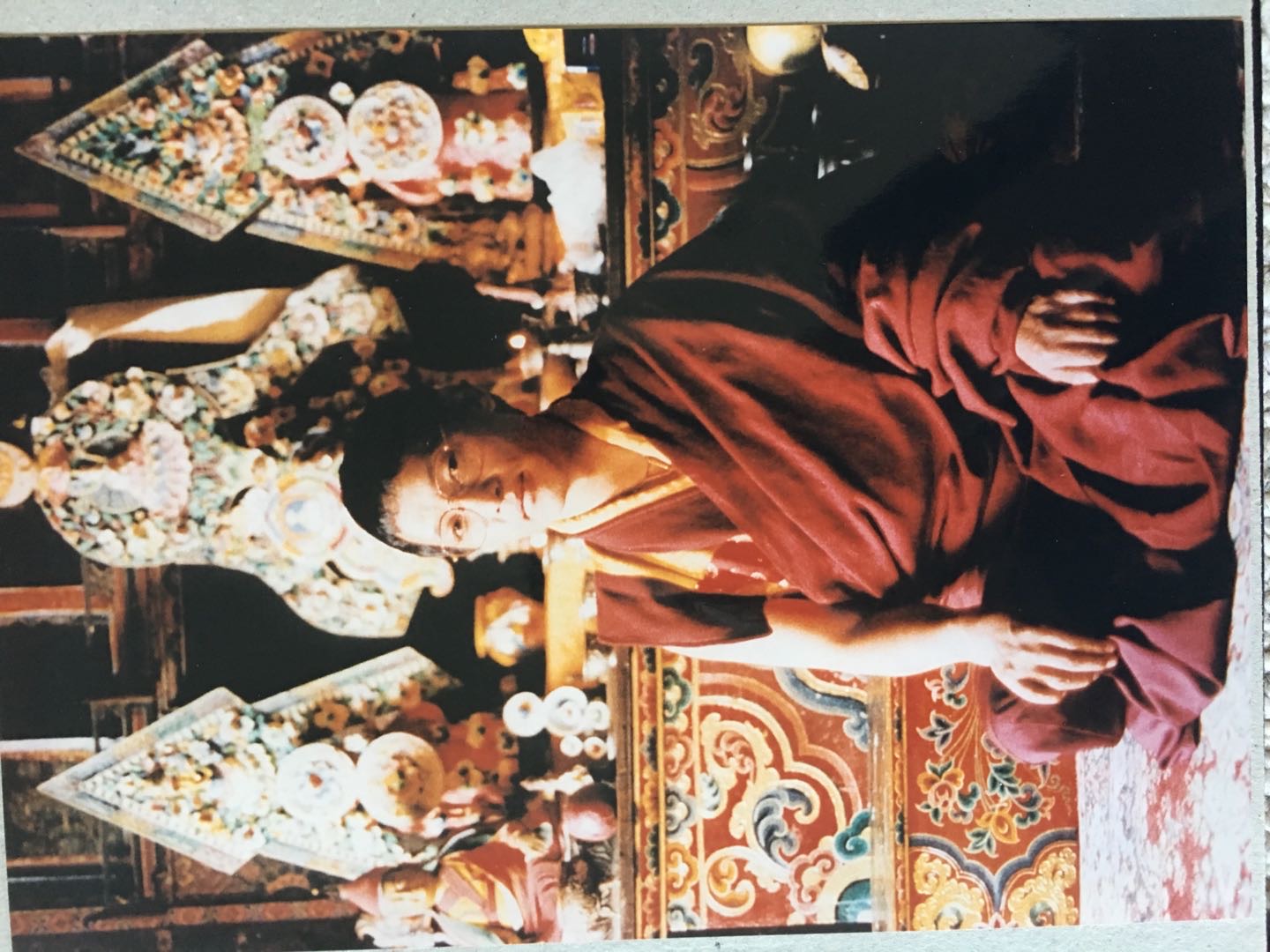
At the time the present Gangteng Tulku appeared, only Dudjom Rinpoche still held the complete transmissions of the lineage. In order to receive the pure and unbroken lineage, the young Gangteng Tulku studied under Dudjom Rinpoche for many years, receiving the complete empowerments, oral transmissions, and essential instructions.
Gangteng Rinpoche was deeply treasured by Dudjom Rinpoche and greatly loved by the Dakini Mother. Unlike other Rinpoches — regardless of their fame or status — who had to request formal audiences through attendants and wait for permission to enter the palace, Gangteng Rinpoche was allowed to freely enter and leave Dudjom Rinpoche’s residence. Whenever he had questions regarding the Dharma, Dudjom Rinpoche would generously bestow empowerments, transmissions, and teachings without reservation.
On one occasion, the young Gangteng Rinpoche reflected sorrowfully that the Pema Lingpa lineage had gradually weakened, and that many monasteries originally belonging to the Pedling tradition had shifted to other lineages. He therefore asked Dudjom Rinpoche whether he himself should also adopt another lineage, such as the Dudjom New Treasures tradition.
Dudjom Rinpoche immediately stopped him and replied:
“Anyone else may change traditions, but you alone must never do so. Not only must you not abandon it, you must dedicate your entire life to preserving and flourishing the Pema Lingpa lineage. The lineage of Pema Lingpa is the lineage of the King of Treasure Revealers, more precious than any other lineage. This is precisely why I have worked so hard to transmit the complete Pedling lineage to you.”
Dudjom Rinpoche further stated:
“According to Guru Padmasambhava’s prophecies, my purpose in this world is not only to reveal new treasures, but also to revive the ancient treasure teachings. Among all the old treasure traditions, the treasures of Pema Lingpa are among the most important.”
For this reason, the present twenty-one-volume collected works of Pema Lingpa widely used in Bhutan were personally handwritten, compiled, and edited by Dudjom Rinpoche himself, with publication sponsored by the Queen Mother of Bhutan, Ashi Phuntsho Choden. These volumes contain secret dakini scripts personally inscribed by Dudjom Rinpoche. Since very few people today can decipher these sacred symbols, the texts cannot easily be altered by anyone unless a realized master of equal attainment appears again. This demonstrates how deeply Dudjom Rinpoche valued the Pedling lineage.
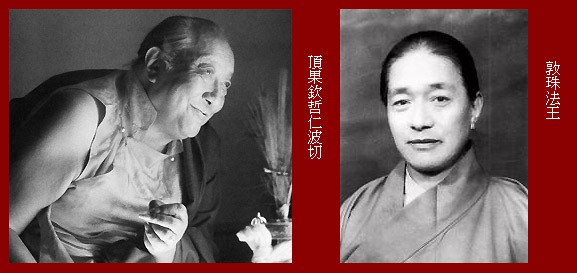
It is because of Dudjom Rinpoche that the Pema Lingpa lineage texts and transmissions survived in their complete form. Whenever Gangteng Rinpoche speaks of his guru, Dudjom Rinpoche, profound reverence and gratitude naturally arise. Rinpoche once remarked:
“Until today, I have never ceased practicing Guru Yoga. I have never ceased visualizing receiving the Four Empowerments from Dudjom Rinpoche, nor have I ever ceased praying to my guru.”
During this period, the Ninth Gangteng Tulku also received the complete empowerments and teachings of the Pema Lingpa lineage from both Dudjom Rinpoche and Dilgo Khyentse Rinpoche. Both masters had received these transmissions in Tibet and carried the precious texts with them when fleeing Tibet.
Following these studies, Gangteng Rinpoche entered long-term retreat training under the former Je Khenpo Tenzin Dendup for eight years. Je Khenpo Tenzin Dendup was widely recognized as one of the great Dzogchen masters of realization in modern times. He lived in solitary retreat at the farthest reaches of the Thimphu Valley in Bhutan, completely devoted to meditation practice.
At the same time, the Ninth Gangteng Tulku also inherited the historic responsibility of restoring the Pema Lingpa tradition.
There had been an interval of approximately forty years between the present and previous Gangteng Tulkus. During the political instability of the early twentieth century, the Eighth Gangteng Tulku spent much of his life governing the Paro region. Consequently, the Pema Lingpa lineage and Gangteng Monastery experienced severe decline. Even more tragically, the Pema Lingpa lineage in Tibet was almost entirely destroyed.
Before this destruction, the lineage had flourished for centuries in the monasteries of the Sungtrul and Tukse incarnations — the speech and mind emanation lineages of Pema Lingpa. Today, Gangteng Tulku Rinpoche stands as the principal holder of the Pema Lingpa treasure teachings and bears the immense responsibility of reviving these precious teachings and practices.
During this period, he began teaching extensively throughout Bhutan while also traveling to Nepal for several years to study under the highly revered Dzogchen master Chatral Rinpoche.
In the mid-1980s, encouraged by his teacher Je Khenpo Tenzin Dendup, Gangteng Tulku Rinpoche decided to travel to the West to teach Dzogchen and the Nine Yanas. At first, he traveled entirely alone, without attendants or assistants. His purpose was to revitalize the Pema Lingpa lineage by transmitting the Dharma to Western students, while also raising support for the restoration of the four-hundred-year-old Gangteng Monastery and other Dharma projects in Bhutan.
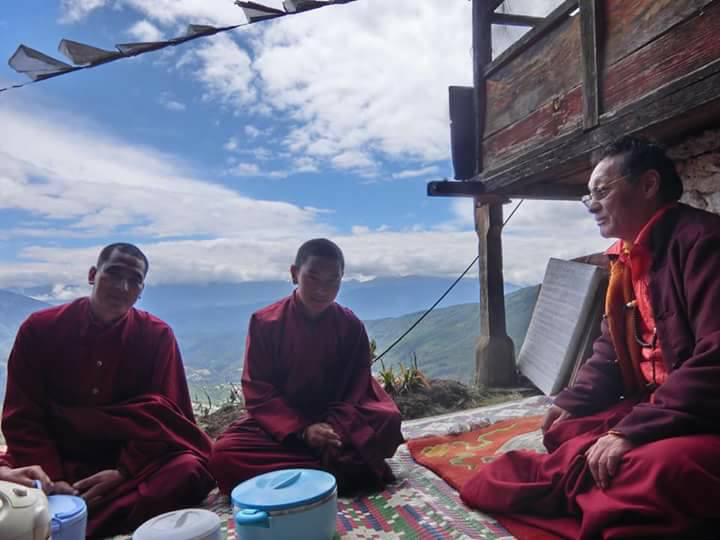
After completing another solitary three-year retreat in 1992, Gangteng Rinpoche continued tirelessly working for the preservation and flourishing of the Pema Lingpa teachings and practices.
Through his efforts, numerous important institutions were established, including:
- two traditional three-year retreat centers,
- a secluded Dzogchen three-year retreat center,
- a monastery near his birthplace in Trongsa,
- a nunnery and retreat center near Bumthang, the birthplace of Pema Lingpa,
- and a major Buddhist college near Gangteng Monastery with standards comparable to a university.
These achievements represent only part of Gangteng Rinpoche’s extensive Dharma activities.
Each year, Gangteng Rinpoche teaches throughout Europe and North America, where retreat centers have also been established under his guidance.
In March 2000, the Manitou Foundation donated approximately 320 acres of pristine mountain forest land in Colorado, USA, to Yeshe Khorlo. This land later became the retreat and teaching center known as Chöying Dzong, where the main temple and four retreat cabins have since been completed.
Today, both Chöying Dzong in Crestone, Colorado, and Pema Yang Dzong in the Jura region of France provide facilities for both short-term and long-term personal and group retreats, and regularly host Gangteng Rinpoche’s teachings.
Gangteng Rinpoche has also sent highly accomplished teachers and practitioners of the Nyingma and Pema Lingpa traditions abroad, including:
- Lama Tshewang in Europe,
- Lopön Sangay Yeshe in Canada,
- Lopön Pema Dorje in the United States,
- and formerly in Taiwan, Khenpo Pema Tshering, Khenpo Sonam Samten, and Khenpo Pema Wangchuk.
All of them teach and guide students in accordance with the instructions and spiritual vision of Gangteng Tulku Rinpoche.
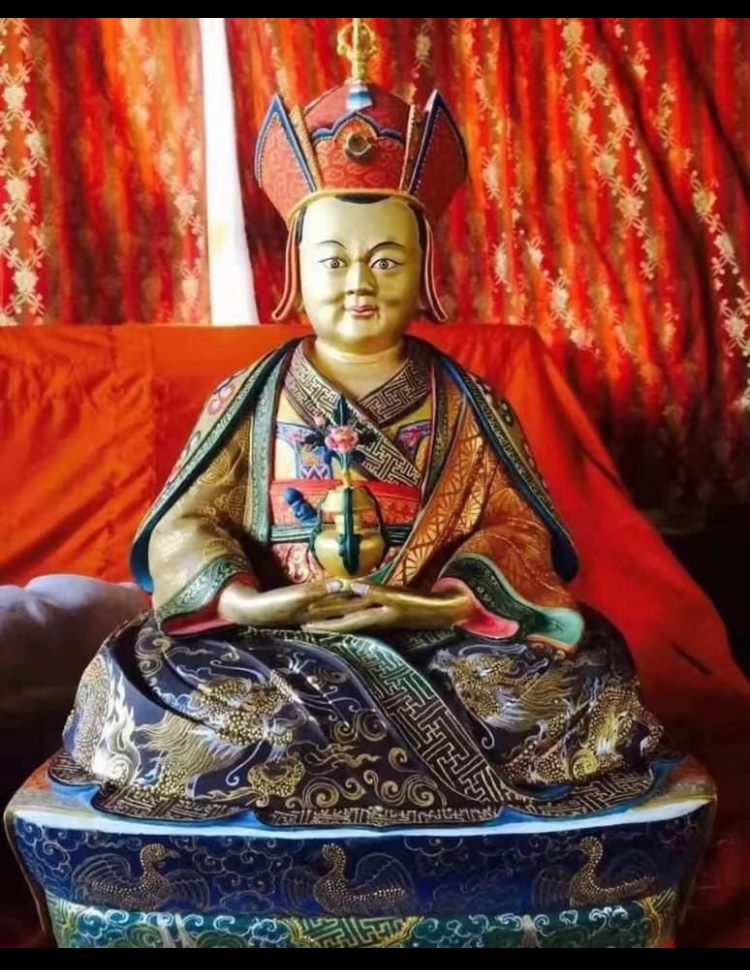
The Incarnation Lineage of the Great Treasure Revealer King, Pema Lingpa
The First Gangteng Tulku was known as Dharma Son Pema Trinley. He was born into the sacred bloodline of Pema Lingpa, the great Treasure Revealer King and spiritual heir of Guru Padmasambhava. Pema Lingpa himself prophesied that Pema Trinley would arise as his body emanation and holder of his enlightened activities, taking rebirth in this degenerate age for the benefit of beings and becoming a protector and refuge for countless disciples.
According to the sacred biographies of Pema Trinley, during the lifetime of Gautama Buddha, when the Buddha was about to demonstrate parinirvana at Kushinagar, he appeared as the lay practitioner Cunda, who prayed for the Buddha not to pass into nirvana. The Buddha then prophesied that in the future he would attain enlightenment under the name “Tathāgata Universal Radiance.”
Later, during the time of Guru Padmasambhava in Tibet, he manifested among the twenty-five principal disciples personally entrusted by Guru Rinpoche. At that time, he was known as Langdro Lotsawa Lhalung Pelgyi Dorje (also referred to in some traditions as Denma Tsemang), having perfected the stages and paths and attained the realization of unfailing dhāraṇī wisdom.
During the later propagation period of Buddhism in Tibet, he was born as King Yeshe Ö, a descendant of King Trisong Detsen, who sacrificed his own life in order to invite the great master Atisha from India to Tibet, thereby ensuring the revival of the Dharma in the Land of Snows.
He also manifested in many other forms for the service of the Dharma and sentient beings, including great masters such as Kunga Gyaltsen, Tenzin Gyaltsen, Jnana Vajra, and Dharma Tashi, continuously benefiting beings on a vast scale.
Later, he took rebirth as a direct disciple connected through the karmic activity of Padmasambhava, becoming the holder of the profound Khandro Nyingtik teachings. Through these sacred teachings, he established many beings upon the path of maturation and liberation. At that time, he was known as Dharma Son Legpa, also called Wangchuk Pelbar.
Thereafter, he manifested as the great scholar and master Chador Lhundrup. Having first completely received the teachings of the Kadam tradition, he later relied upon Longchenpa and studied extensively under the omniscient master. Through hearing, contemplation, and meditation, he realized the same enlightened intent as Longchenpa himself. It is said that he could command oath-bound protectors such as Vajra Rahula as effortlessly as a servant obeying instructions. When walking, his feet reportedly floated slightly above the ground, and he possessed mastery of miraculous powers. He lived to the age of 108 and led innumerable beings toward maturity and liberation.
Once, during the lifetime of Pema Lingpa, he gazed toward the site of Gangteng and declared:
“In the future, the teachings of Secret Mantra will flourish from the summit of that hill.”
The disciples then requested him to build a monastery there, but Pema Lingpa replied:
“The conditions are not yet ripe. In the future, I myself shall return in reincarnated form to establish and spread the teachings there.”
Exactly as prophesied, the successive incarnations of Pema Lingpa later established their seat at that very place, thereby becoming known as the Gangteng Tulkus.
Long ago, the dakinis prophesied to Longchenpa that his activities in future lives would surpass even those of his present incarnation. As foretold, Pema Lingpa and his principal emanations later appeared in the world, revealing profound treasure teachings and widely spreading the Dharma for the benefit of beings.
Among the many renowned disciples connected with the Pema Lingpa lineage were:
- Rinchen Phuntsok,
- the Sakya throne holders,
- Mikyö Dorje,
- and Konchok Yenlak.
In later generations, great masters such as Terdak Lingpa, the Fifth and Sixth Dalai Lamas, Dudjom Rinpoche, and the Khyentse lineage masters also became holders and transmitters of the precious teachings of the Pema Lingpa tradition.
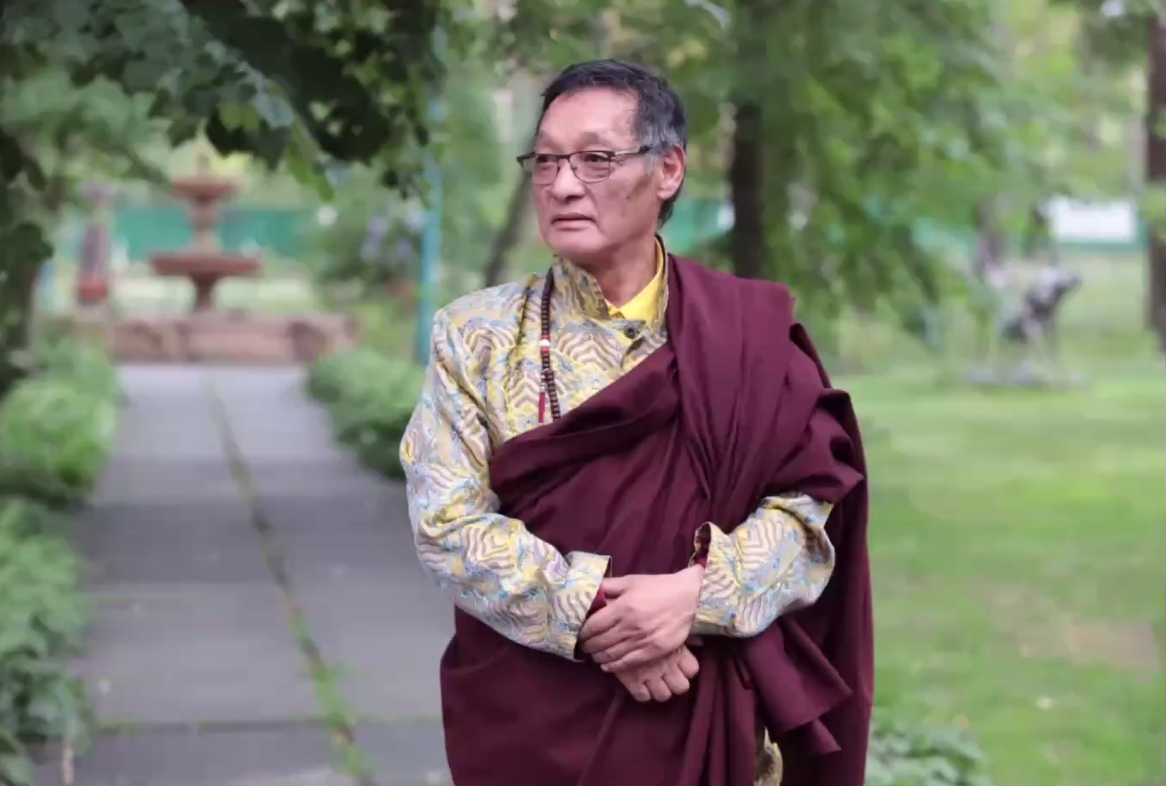
The Present Gangteng Tulku
The present incarnation of Gangteng Tulku Rinpoche bears the spiritual name Kunzang Rigzin Pema Namgyal (“Samantabhadra Vidyadhara Lotus Victory”). He is regarded as a descendant of the sacred lineage of King Trisong Detsen and was born during the winter of 1955 in the Trongsa Valley of central Bhutan.
At the time of his birth, many extraordinary signs are said to have appeared: rare flowers blossomed amidst the snow, rainbow light filled the sky, and numerous auspicious visions manifested throughout the region.
Shortly after his birth, while he was being bathed one morning, a five-colored rainbow suddenly appeared from the eastern sky and descended directly into the bathing vessel. Many witnesses reportedly saw and marveled at this event.
At that very time, the Queen of Bhutan, Ashi Phuntsho Choden, was staying in Bumthang. She is said to have experienced the same vision in a dream, in which dakinis sang the following prophecy:
“Within the sacred vajra land of Gangteng,
there is presently no holder of the teachings.
Soon, in the middle of the winter month,
the incarnation has already appeared — go swiftly to find him.
From these signs, he is in the eastern direction,
near the mouth of the Mangde River.
Among three sons, he is the youngest one,
bearing unmistakable signs upon his body.
Without the incarnation at Gangteng, my heart is uneasy.
We beseech the Queen with great compassion
to welcome the incarnation back to Gangteng.”
Upon awakening, the Queen immediately instructed attendants to record the dream and organize a search for the incarnation. Thus, she became the first among those who formally recognized the reincarnation of Gangteng Tulku.
From early childhood, Gangteng Tulku was able to recount the history of Gangteng Monastery with remarkable accuracy and could naturally perform various rituals, empowerments, and sacred ceremonies without obstruction.
At the age of seven, he entered the monastic college of Dodrak Chökhor Rabten Ling in Trongsa, where he displayed extraordinary intelligence and perfect memory. Within a short time, he mastered the liturgies and ritual systems of the outer, inner, and secret Vajrayana teachings.
Later, he studied under the great Dzogchen adept Polo Khen Rinpoche. On one occasion, before a large assembly, the master publicly declared that the young tulku was indeed the authentic incarnation of Pema Lingpa. Subsequently, Dudjom Rinpoche and Rangjung Rigpe Dorje also formally confirmed him as the unmistaken reincarnation of the Gangteng Tulku lineage.
On another occasion, while visiting Mongar in eastern Bhutan, local villagers pleaded with him to help relieve severe water shortages in the region. It is said that Gangteng Tulku struck the ground with a vajra at a place where no water had ever existed, causing a spring to emerge. From that time onward, he came to be deeply loved and revered by the Bhutanese people.
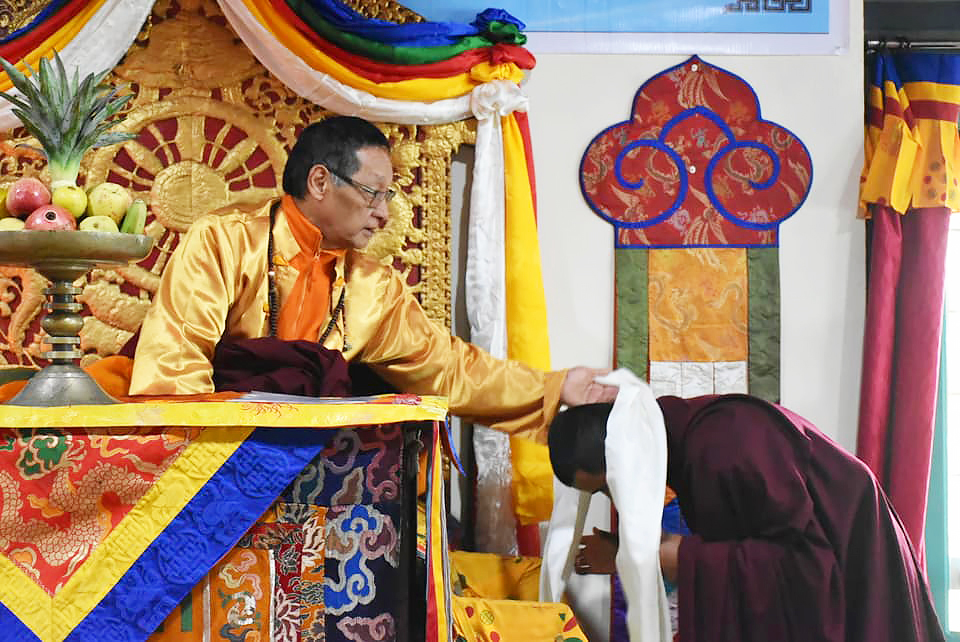
Spreading the Teachings of the Pema Lingpa Lineage
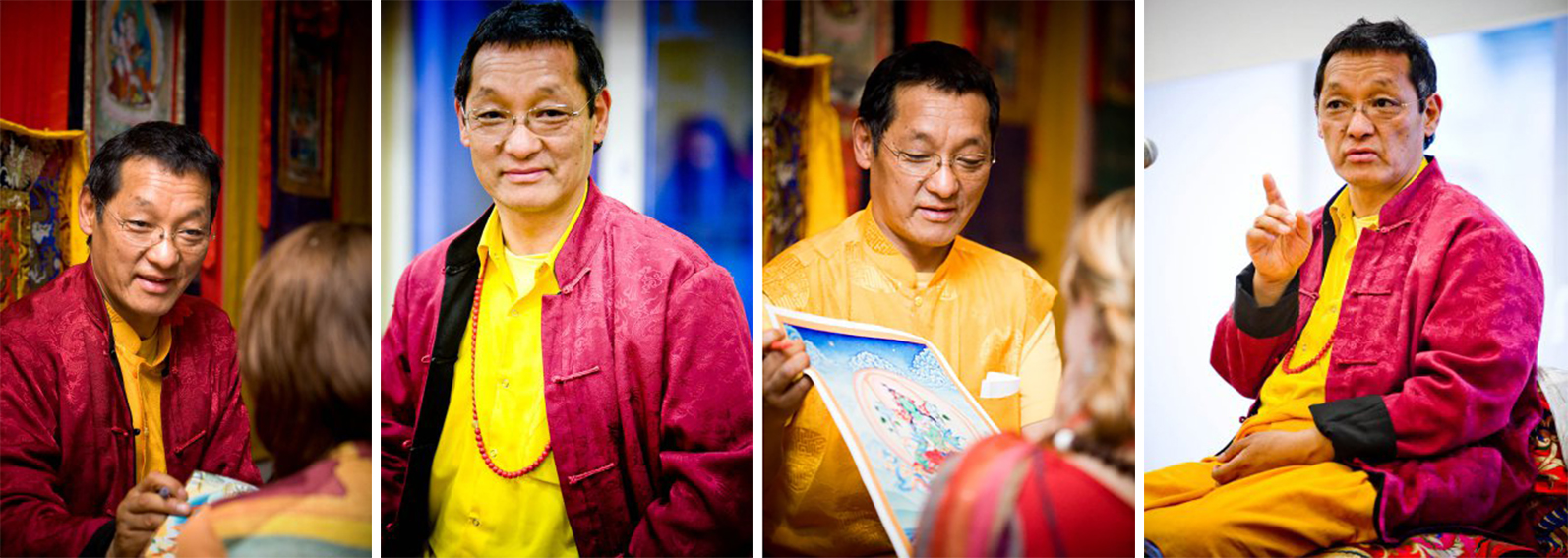
Beginning in the 1980s, Gangteng Tulku Rinpoche started traveling extensively throughout the West to propagate the teachings of the Pema Lingpa lineage, with particular emphasis on the profound teachings of Dzogchen. His Dharma activities spread across Europe and North America, where he also established several Dzogchen retreat centers abroad.
In 2002, Gangteng Rinpoche made his first visit to Taiwan, introducing the teachings of Dzogchen through the profound presentation of Ground, Path, and Fruition. This marked the beginning of systematic Dzogchen teachings in Taiwan within the Pema Lingpa tradition.
During that same year, the Great Dzogchen cycle The Complete Gathering of Samantabhadra’s Intent from the Pedling lineage was translated into Chinese, allowing Taiwanese disciples to engage directly in the authentic practice of Trekchö and Tögal under Rinpoche’s guidance.
Gangteng Rinpoche is regarded as one of the rare contemporary masters capable of directly pointing out the nature of awareness. Through the unique skillful means of the Nyingma lineage, he guides disciples beyond conceptual elaboration toward direct recognition of their own true nature — realizing the empty essence of primordial purity, the luminous clarity of intrinsic awareness, and the all-pervading compassion of awakened mind.
Through these precious transmissions, he has planted the sublime seed of Dzogchen deeply within the hearts of practitioners in Taiwan.
The Great Treasure King Pema Lingpa and the Supreme Treasure Lineage
According to the prophecies of Padmasambhava, there would appear more than one thousand minor treasure revealers and one hundred and eight great treasure revealers in this world. Yet among them, only five would be known as the “Treasure Kings.” To be recognized as a Treasure King, one must fully reveal and transmit the three supreme cycles of accomplishment: the Guru Sādhana, the Dzogchen realization teachings, and the Great Compassion practices. Through these three profound paths, beings are able to swiftly attain liberation and enlightenment; therefore, the benefit bestowed upon sentient beings by such masters is said to be immeasurable.
These Five Treasure Kings are all regarded as heart sons of Guru Padmasambhava. Among them, Pema Lingpa, the great master of Uddiyana, is revered as the sovereign of the Southern Treasure tradition. His fame spread throughout India, Tibet, and Bhutan. The primary holders of his lineage were Pema Lingpa himself together with his three principal emanational lineages. Their principal seat became Gangteng Monastery in the sacred land of Bhutan, from where successive incarnations of the lineage holders traveled throughout the world to benefit beings through the Dharma.
The Three Principal Emanations of the Treasure King Pema Lingpa — heart son of the Second Buddha of Uddiyana — are regarded as the final of the five pure rebirths of Princess Pemasel. In the prophetic testament teachings of Guru Padmasambhava, it is stated:
“The treasure concealed within the Flaming Lake
shall be revealed through fearless extraction.
The revealer shall be known as Uddiyana Pema Lingpa.”
Exactly as foretold, Pema Lingpa was born in 1450, during the Iron Horse Year of the eighth sixty-year cycle, in the Bumthang region of southern Bhutan within the noble Nyö clan. His father was Döndrup Zangpo and his mother, Pema Drolma, was a shepherdess bearing the signs of a dakini. At the time of his birth, numerous wondrous and auspicious signs appeared.
Because Pema Lingpa had previously been the omniscient Dharma King Longchenpa, his innate wisdom awakened naturally from childhood. Without formal study, he effortlessly mastered literature, arts, and various fields of knowledge.
Especially significant was an event that occurred on the tenth day of the Monkey Month in a Monkey Year, when Guru Padmasambhava personally appeared before him at Mani Monastery, bestowed blessings, and entrusted him with the signs and keys of one hundred and eight treasure teachings.
At the age of twenty-seven, Pema Lingpa revealed the “Lungsang” cycle from the cave of Nari Drak, thereby beginning the revelation of numerous profound secret treasures.
One of the most famous events of his life occurred at Mebar Tsho — the “Flaming Lake” — near Tang Valley. Before a large gathering of witnesses, Pema Lingpa held a burning butter lamp in his hand and leapt into the deep lake. Emerging from the waters, he carried a treasure chest beneath his arm while the flame of the lamp remained miraculously unextinguished. Those who witnessed the event were struck with awe and immediately developed unwavering faith. From that moment, the fame of the treasure revealer spread throughout the land like the radiance of the sun and moon.
Among the many treasures revealed by Pema Lingpa were:
- the Dzogchen cycle The Complete Gathering of Samantabhadra’s Intent,
- the Dzogchen Nondual Tantra teachings,
- The Ocean of Guru Mind Accomplishment,
- the Red Avalokiteshvara cycle Lamp Dispelling the Darkness of Great Compassion,
- the Eight Heruka cycle Mirror of Enlightened Mind,
- the Secret Phurba cycle Blade of Vital Essence,
- nectar medicine accomplishment practices,
- Vajrapāṇi subjugation practices,
- wrathful Vajrapāṇi cycles,
- the three levels of wrathful accomplishment practices,
- long-life practices of Amitāyus in union form,
- longevity accomplishment practices,
- the “Three Black Deities” cycles,
- and numerous karma and ritual accomplishment teachings.
He also revealed many sacred substances, ritual objects, statues, reliquaries, and sacred supports, including treasures such as the “Liberation Through Taste” and “The Seven Brahmins,” as well as the Guru Padmasambhava representation known as Pema Guru. Throughout his lifetime, he revealed an inconceivable number of treasures.
Guru Padmasambhava further prophesied that in the future Pema Lingpa would attain unsurpassed enlightenment in the Lotus Adorned Pure Realm, where he would become the Buddha known as Tathāgata Vajra Treasury. It is said that all beings who establish a karmic connection with Pema Lingpa will eventually be reborn in that pure realm, become disciples of that Buddha, and ultimately attain perfect enlightenment there.
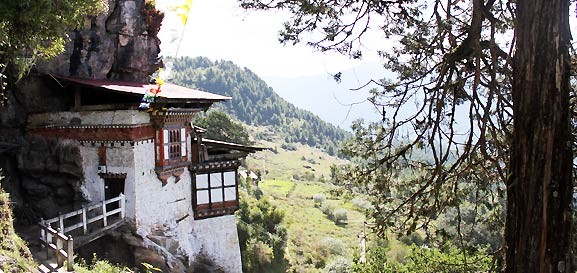
Kunzang Tsa (Samantabhadra Rock), the Practice Sanctuary of Pema Lingpa